
HIP vs. DIA Grade Reflective Sheeting: What Is the Real Difference?
Updated: Jun 10
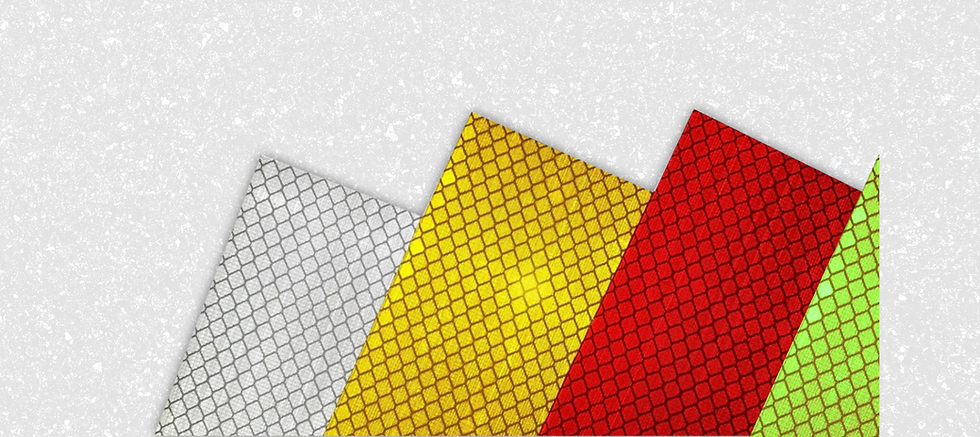
Both High Intensity Prismatic (HIP) or Diamond Grade (DIA / DG) reflective sheeting are MUTCD compliant when used correctly, but they are not interchangeable. Each grade is designed for a different level of risk, speed, and visibility requirement.
What is HIP Grade Reflective Sheeting?
High Intensity Prismatic (HIP) is a mid to high performance sheeting that uses a prismatic structure to return light to the driver. HIP is a good choice when you want solid brightness and long life, but the road is not high speed, high volume, or complex. HIP sheeting is more cost-effective than DIA because of this.
Typical uses are:
Regulatory and warning signs on standard urban and rural roads
Local streets with moderate speeds (25-45 mph) and typically only vehicle traffic
Many work zone applications where sight lines are already clear
Locations without a severe crash history
What is Diamond Grade Reflective Sheeting?
Diamond Grade (DIA or DG) is a premium reflective sheeting with a more advanced prismatic design, making it noticeably brighter than HIP. It is engineered for very high visibility at longer distances and at wider observation angles to maintain clear, legible signs for drivers in high-risk environments.
Typical uses are:
High speed (50+ mph) roads and multi lane approaches (highways, expressways)
Intersections or curves with limited sight distance
High crash locations that need extra attention
School zones, pedestrian crossings, and roads with cyclists
Areas with heavy truck traffic or complex lighting conditions
HIP or Diamond Grade: How To Decide?
It is critical to understand what your sign is being used for and where it will be installed. If your sign hypothetically disappeared at night, could someone easily miss a stop, a curve, a crosswalk, or a lane change? This is how you will know if Diamond Grade is the right choice for you. Start with the speed of your location: if the speed limit is 50 mph or higher, opt for Diamond Grade. School zones and pedestrian crossings also use Diamond Grade because the consequences are higher.
What About a Flashing LED Sign?
Once you have chosen between HIP and Diamond Grade, the next question is whether you want to deliver even better safety at your location.
For HIP projects, a flashing LED sign is a way to get more “bang for your buck”. You keep the budget friendly reflective grade and gain a higher level of attention, which is especially helpful at approaches where drivers may be distracted, tired, or dealing with cluttered backgrounds.
For Diamond Grade projects, LEDs are a powerful addition in the most critical situations. If you are already investing in Diamond Grade because of high speeds, complex geometry, or past crashes, adding an LED border can help bring crash numbers down even further by drawing drivers’ eyes to the sign at exactly the right moment.

Stop-Lite's flashing LED signs are Made in the USA and are very easy to install on new or existing posts. These enhanced sign can make your message almost impossible to ignore, especially at early morning, nigh time, or during bad weather. For more information on Stop-Lite's standard and custom indoor/outdoor flashing signage options, visit our page for more information: https://www.stop-lite.net/copy-of-led-safety-products



Comments